Allan D'Arcangelo

Former Cleveland Museum of Art Chief Curator of Modern Art Edward Burk Henning, artist Allan D'Arcangelo, and artist James N. Wines selecting artworks for In Western New York 1969 in October 1969. Image courtesy of the Albright-Knox Art Gallery Digital Assets Collection and Archives, Buffalo, New York.
Allan D’Arcangelo was born in 1930, in Buffalo, New York. He studied at the University of Buffalo from 1948–1953, where he received his bachelor’s degree in history. After college, he moved to Manhattan to study at the New School of Social Research and the City University of New York, City College. During this time he encountered the work of the Abstract Expressionist painters who were in vogue. After joining the army in the mid 1950s, D'Arcangelo used the GI Bill to study painting at Mexico City College from 1957–59. In 1959, D’Arcangelo returned to New York City in search of the mythic American experience. It was at this time that his painting assumed its cool, removed aesthetic reminiscent of Roy Lichtenstein and Andy Warhol.
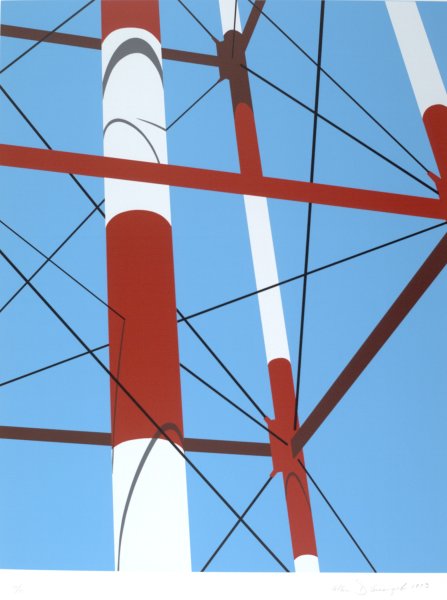
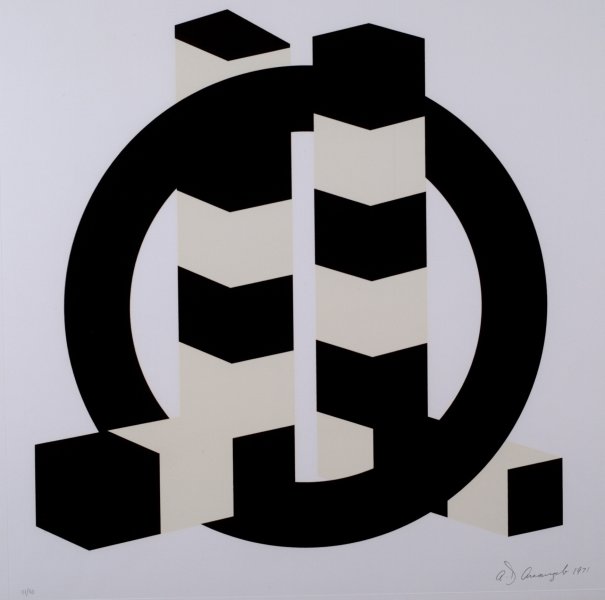
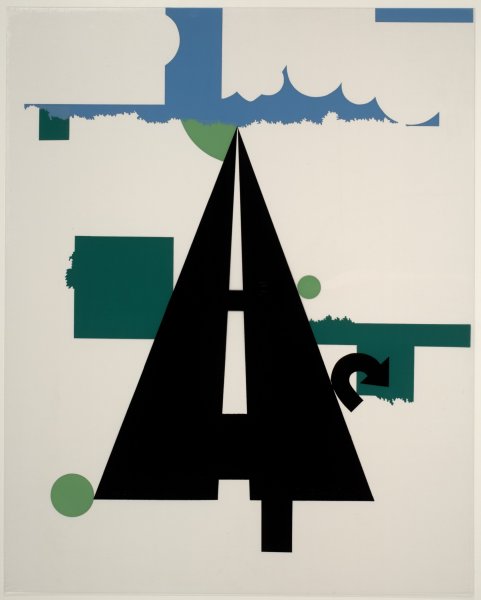
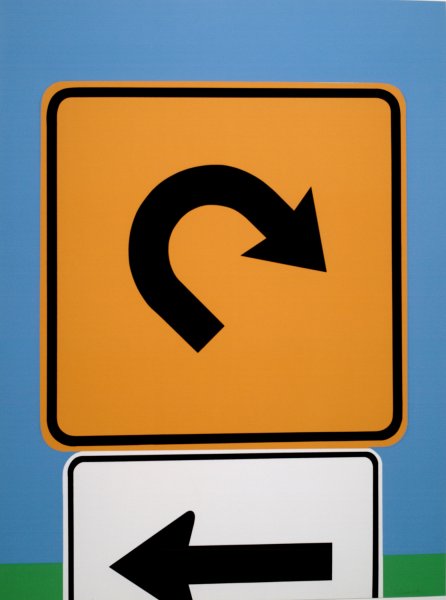
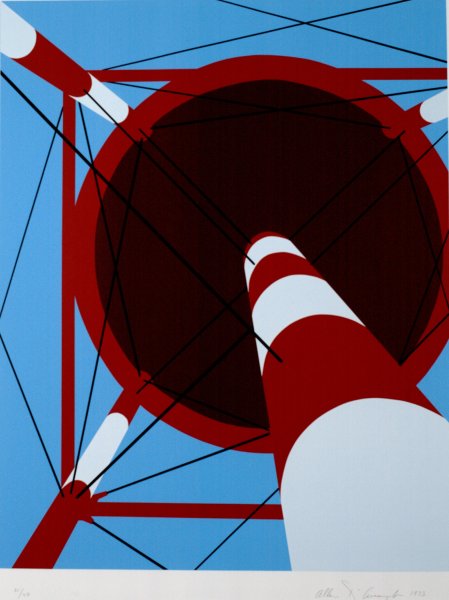
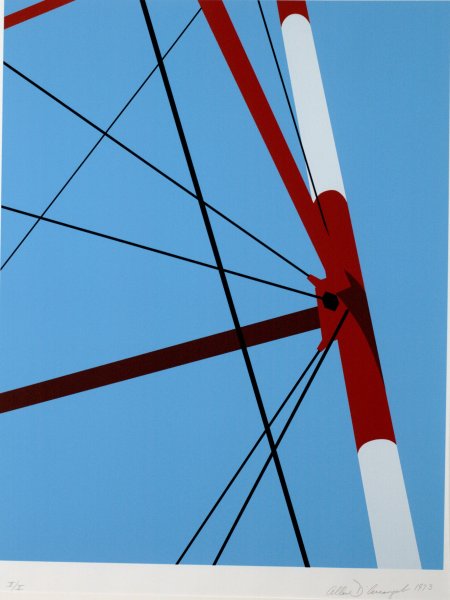
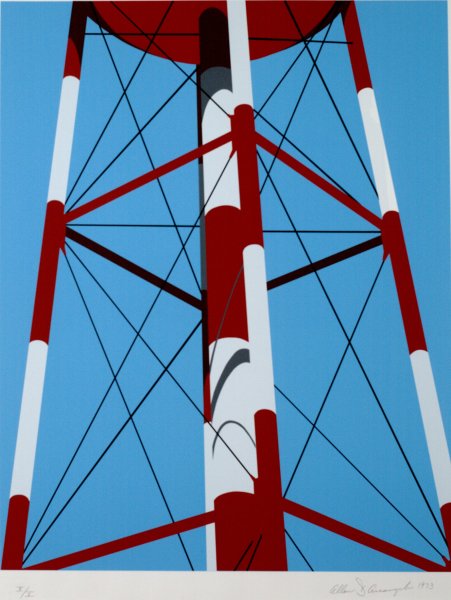
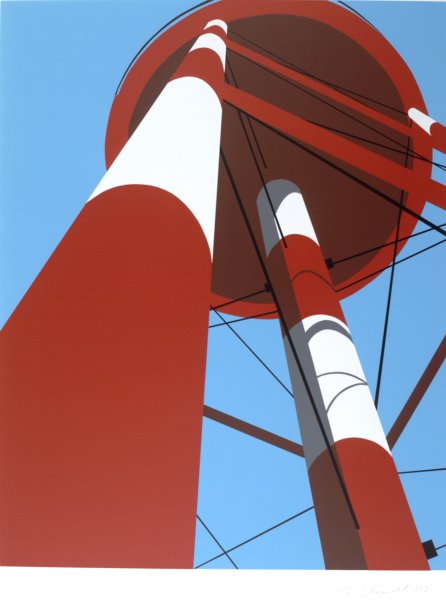
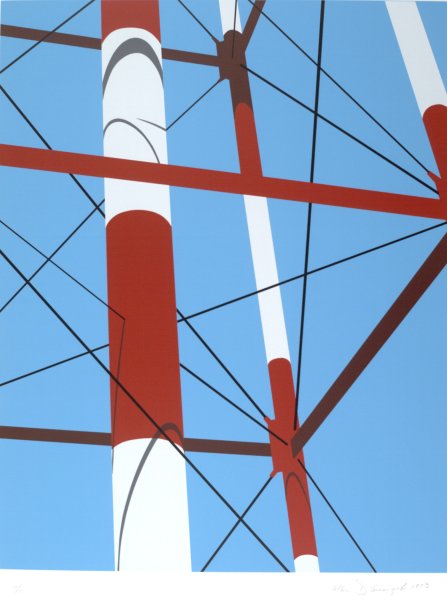
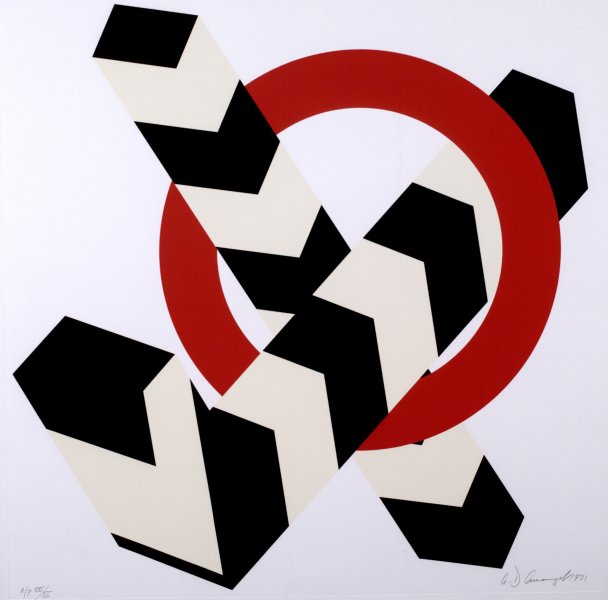
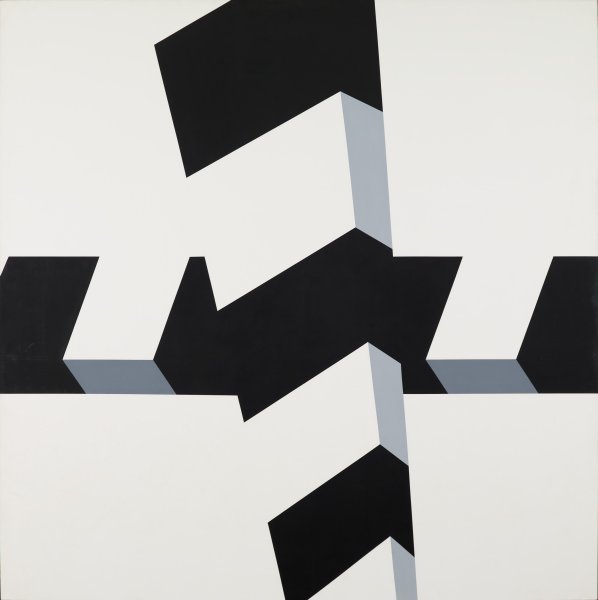
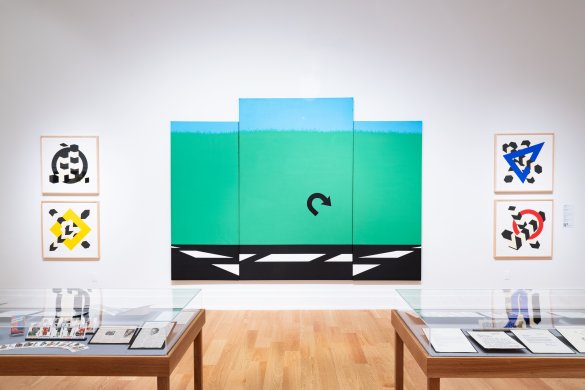
By the 1970s, D’Arcangelo had received significant recognition in the art world. He was well known for his paintings of the iconic American highway along with his depictions of desolate, industrial landscapes. D’Arcangelo’s compositions relate to Pop art. However, they also demonstrate a career-long fascination with archetypes of the built environment, both emblematic and monumental. The artist once described himself as searching for “icons that mattered.” His use of vernacular imagery was motivated by a desire not to glorify the contemporary landscape, but to bring the spiritual significance of art to a more familiar context.