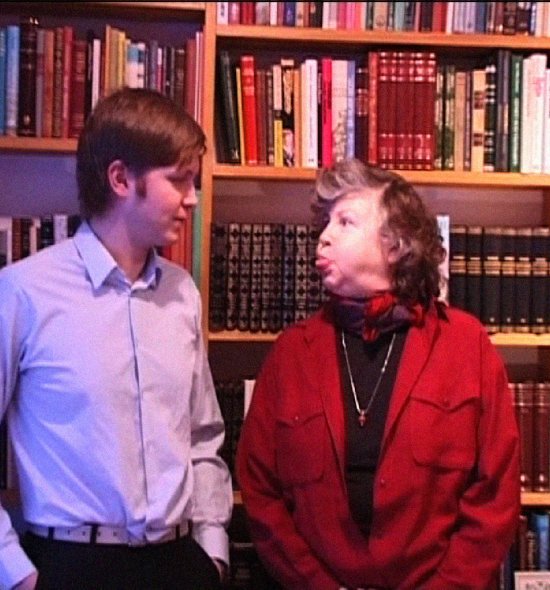
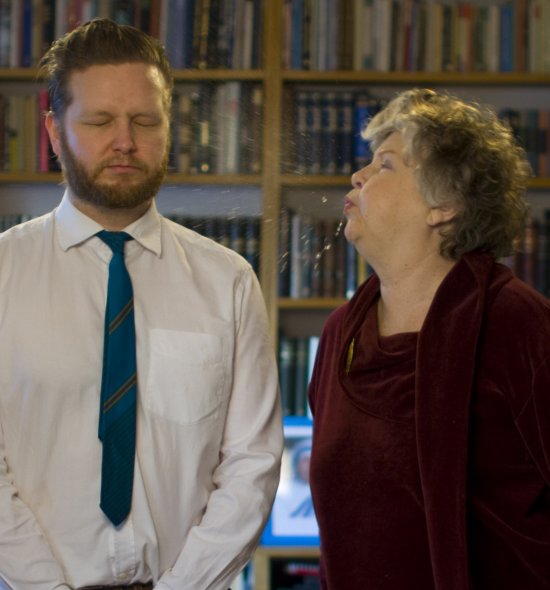
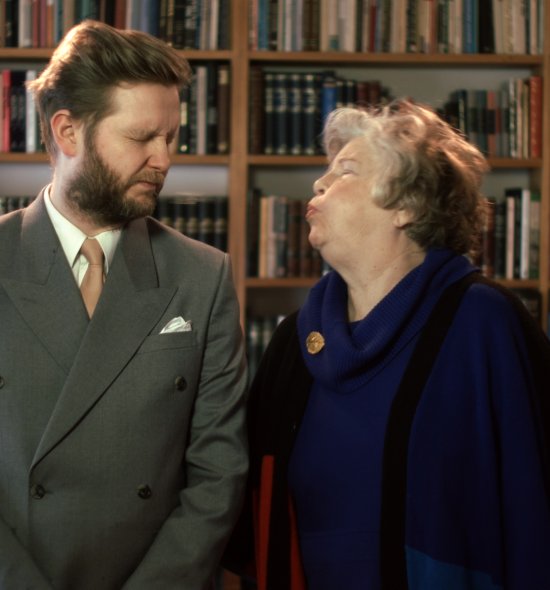
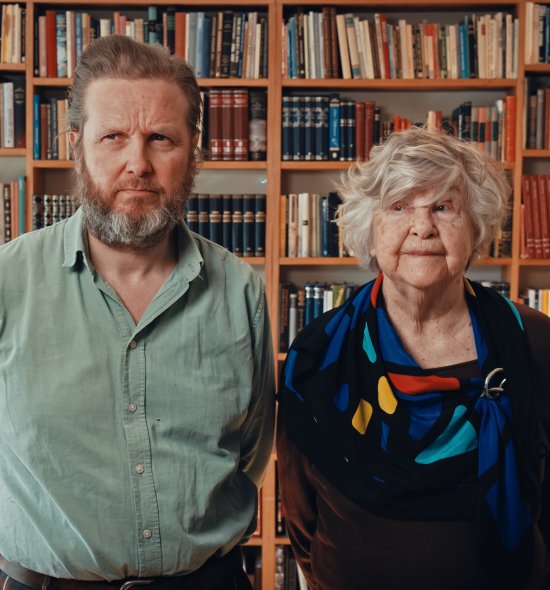
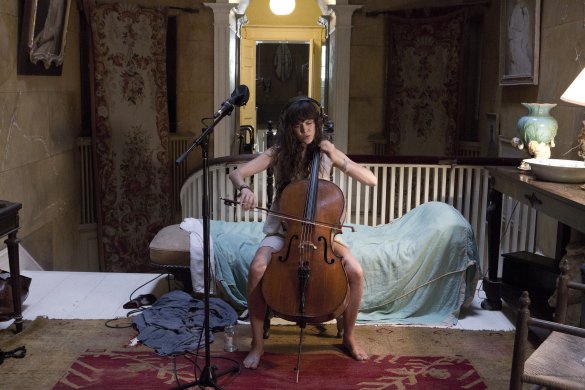
In the video Scenes from Western Culture (The Boat) (2015), for example, an elegantly dressed couple repeatedly and languidly sets off into a tranquil sea; the man stays the same while the woman seems to keep changing. Their evident wealth and ease, coupled with the impossible beauty of their setting, constitute the stuff of glossy travel brochures, the carefully constructed advertising tropes that wallpaper an office worker’s imaginary. Such an unachievably perfect two weeks’ vacation was, of course, a reward designed to help keep that same worker productive during the other fifty weeks of the year. Devoid of drama or incident, Kjartansson’s The Boat embodies the deep-rooted fantasy that leisure (enjoyed through the brief reprieve of a vacation or more durably attained through wealth) will cure what ails us. It illustrates a fiction that is as inherent to modernity as our increasingly digital and monitored working lives.
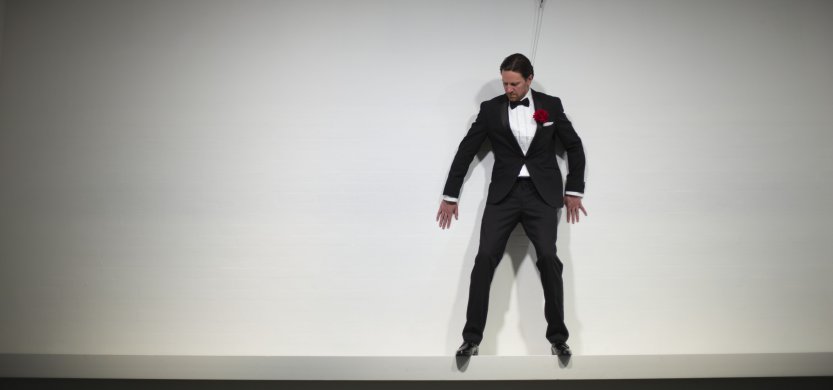
The nearby live performance Bangemand / Scaredman (2023) offers a stark counterpoint to the holidaymakers in The Boat. Every day during the museum’s open hours, a man in a tuxedo inches along a narrow ledge high in a gallery, his body pressed anxiously against the wall. The scenario recalls cinematic tropes—from silent-era physical comedy to midcentury thrillers such as Vertigo (1958)—yet Kjartansson strips the scene of narrative resolution. A clean-cut, suited figure is typically a sign of masculine authority, composure, and control; in Scaredman, he instead appears beset by unseen and undefined forces. The performance evokes a familiar cultural script in which masculinity is cast as under siege, transforming a familiar archetype into a meditation on fear, spectacle, and the troubling logic that power sustains itself by staging its own vulnerability.