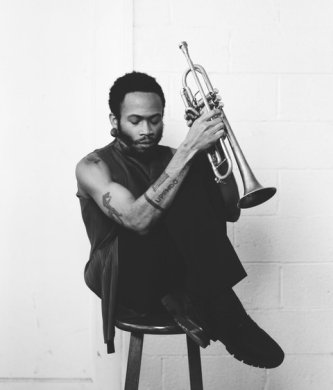
Joel Ross continues refining an expression that is unmistakably his own—rooted in the Black music tradition, shaped by collective improvisation, and animated by a deep commitment to story, spirit, and shared purpose. Since the release of his Edison Award–winning Blue Note debut KingMaker (2019), Ross has emerged as one of the most compelling voices of his generation, praised for music that balances rhythmic complexity, lyricism, and emotional clarity.
His follow-up releases Who Are You? (2020) and The Parable of the Poet further solidified his reputation as a bandleader who treats improvisation as conversation and rhythm as something both fundamental and fluid. As The New York Times observed, his music “speaks to a new level of group cohesion…more tangle, more sharing, more possibility.”
Ross’ playing has been described by DownBeat as “high-powered and full of luminous energy,” and his ascent has been marked by numerous accolades, including top placements in the DownBeat Critics Poll and multiple Jazz Journalists Association awards. He has earned commissions and residencies from The Jazz Gallery, Roulette Intermedium, Jazzfest Berlin, and the Jazz Coalition, and has appeared at storied venues including The Village Vanguard, Kennedy Center, Newport Jazz Festival, North Sea Jazz Festival, Ronnie Scott’s, and Umbria Jazz Festival.
Across his work, Ross draws from a lineage that resists rigid categories. As Pharoah Sanders once said, “to me, it’s all spiritual music,” and Ross’s music reflects that continuum—moving naturally between blues, gospel, and jazz traditions. His compositions leave space for themes to emerge and evolve, and his improvising lines often approximate speech, shifting between roles of storyteller, protagonist, and collaborator. Inspired by mentor Stefon Harris’s whole-self approach to music-making, Ross has developed an ethos grounded in empathy, honesty, and collective responsibility.
That ethos comes into especially clear focus on Gospel Music, Ross’s fifth release as a leader for Blue Note Records. Both a continuation and a departure, the album explores the spiritual and communal foundations that have long informed his artistry, drawing deeply from the sound and practice of the Black church in Chicago. Rather than functioning as genre exercise, Gospel Music uses collective melody, layered harmony, and open improvisation to explore ideas of service, sacrifice, and renewal. The music revisits the intricacy of Ross’ earlier work while offering a new clarity and directness—creating meditative space where complexity and accessibility coexist.
Recorded with his core ensemble Good Vibes—featuring Jeremy Corren (piano), Kanoa Mendenhall (bass), and Jeremy Dutton (drums), alongside saxophonists Maria Grand and Josh Johnson—Gospel Music expands Ross’s sonic palette while reinforcing the familial chemistry that defines his bands. The album also includes vocal contributions from Laura Bibbs, Ekep Nkwelle, and Andy Louis, and reflects Ross’ interest in blurring the boundaries between written composition and spontaneous creation. As with his live performances, leadership here is expressed through listening, trust, and the intentional creation of space.
Playing firmly within the resonant tradition of Black music, Joel Ross continues to create work that is expansive, searching, and deeply human. Whether on record or onstage, his music invites listeners into a space where virtuosity serves connection—and where sound becomes a means of listening, reflection, and shared becoming.